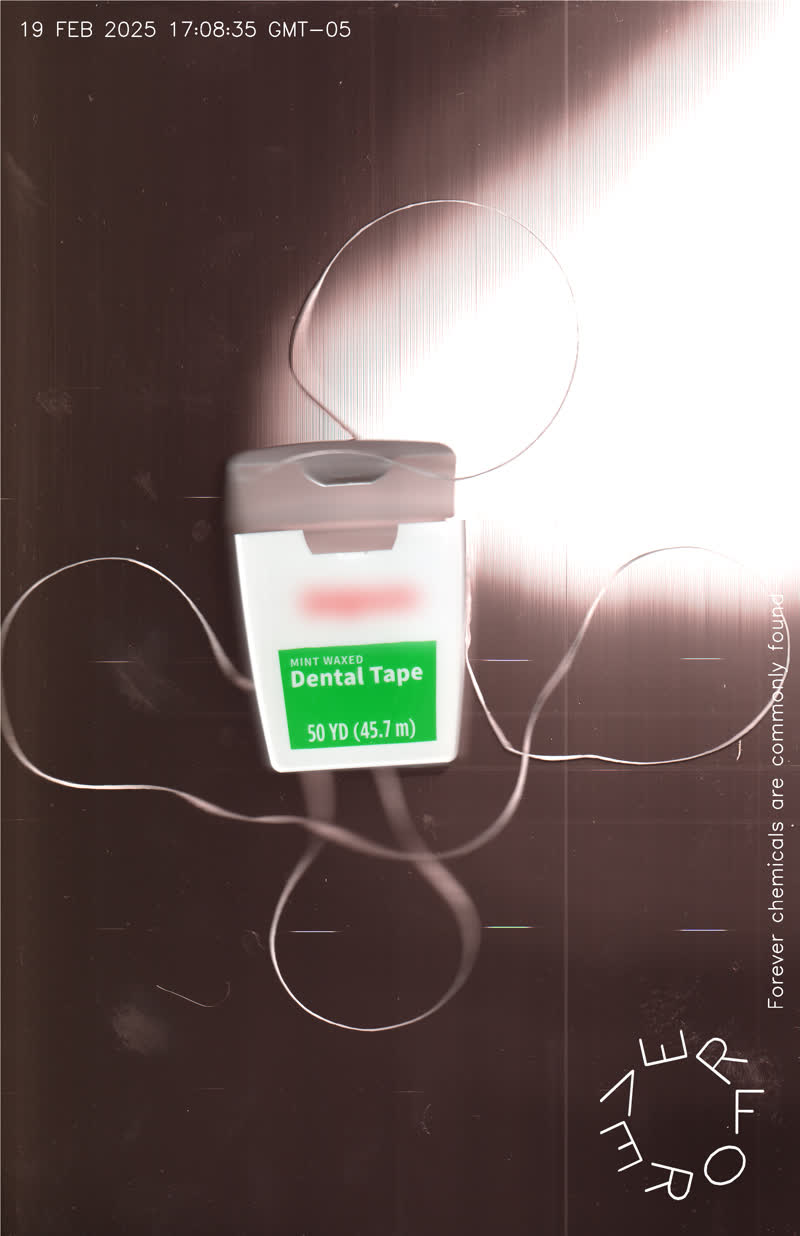
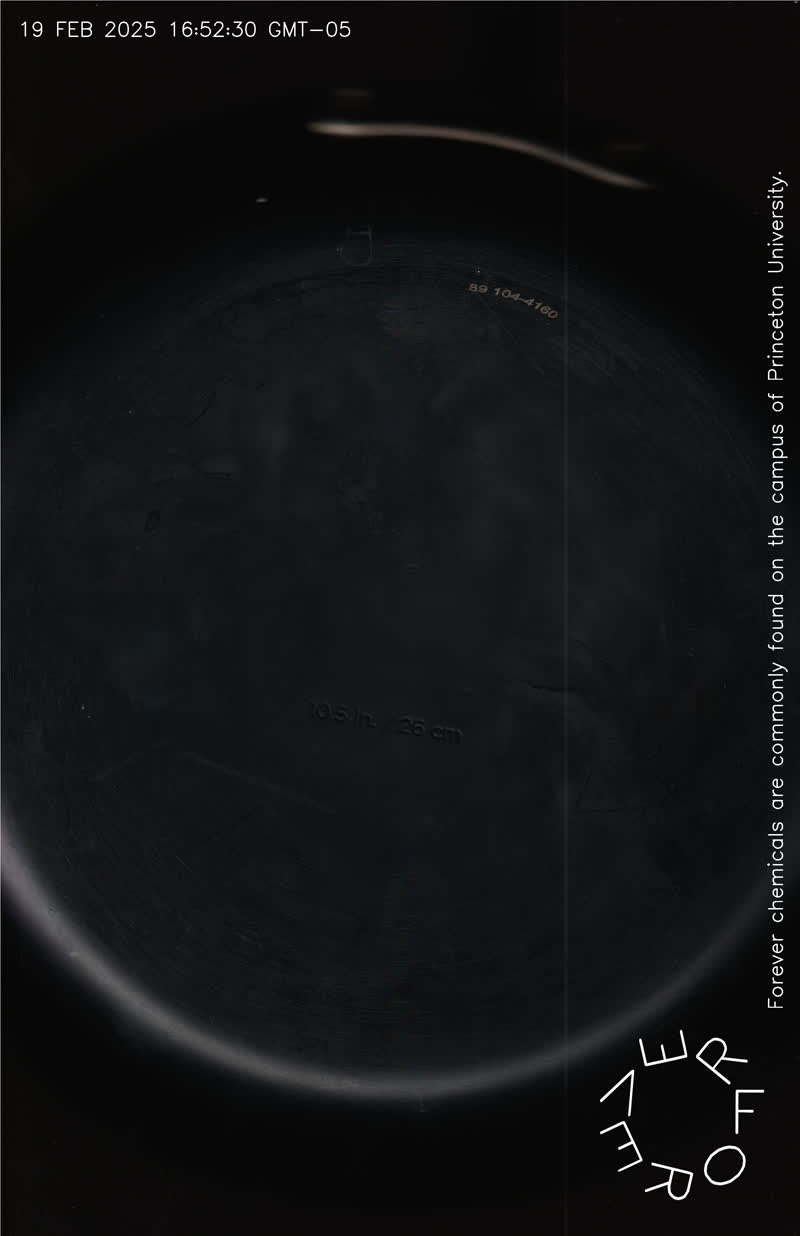
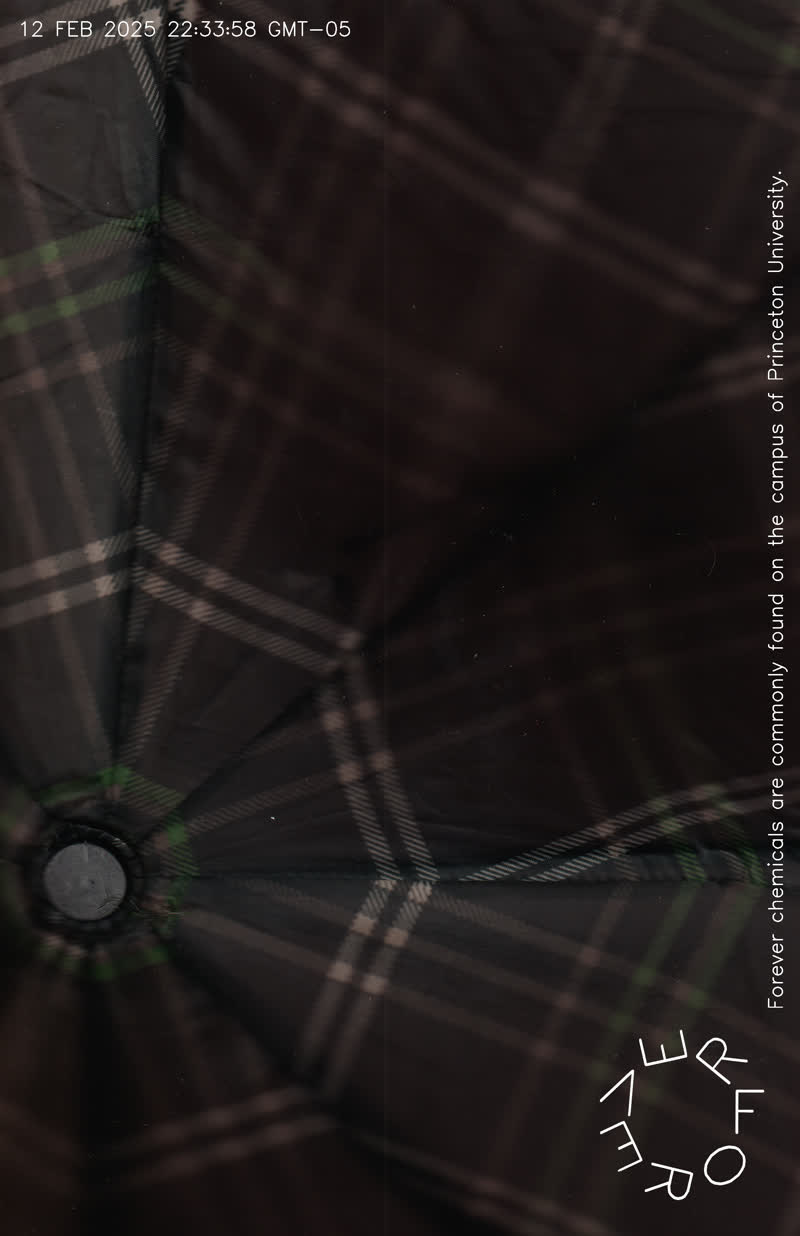
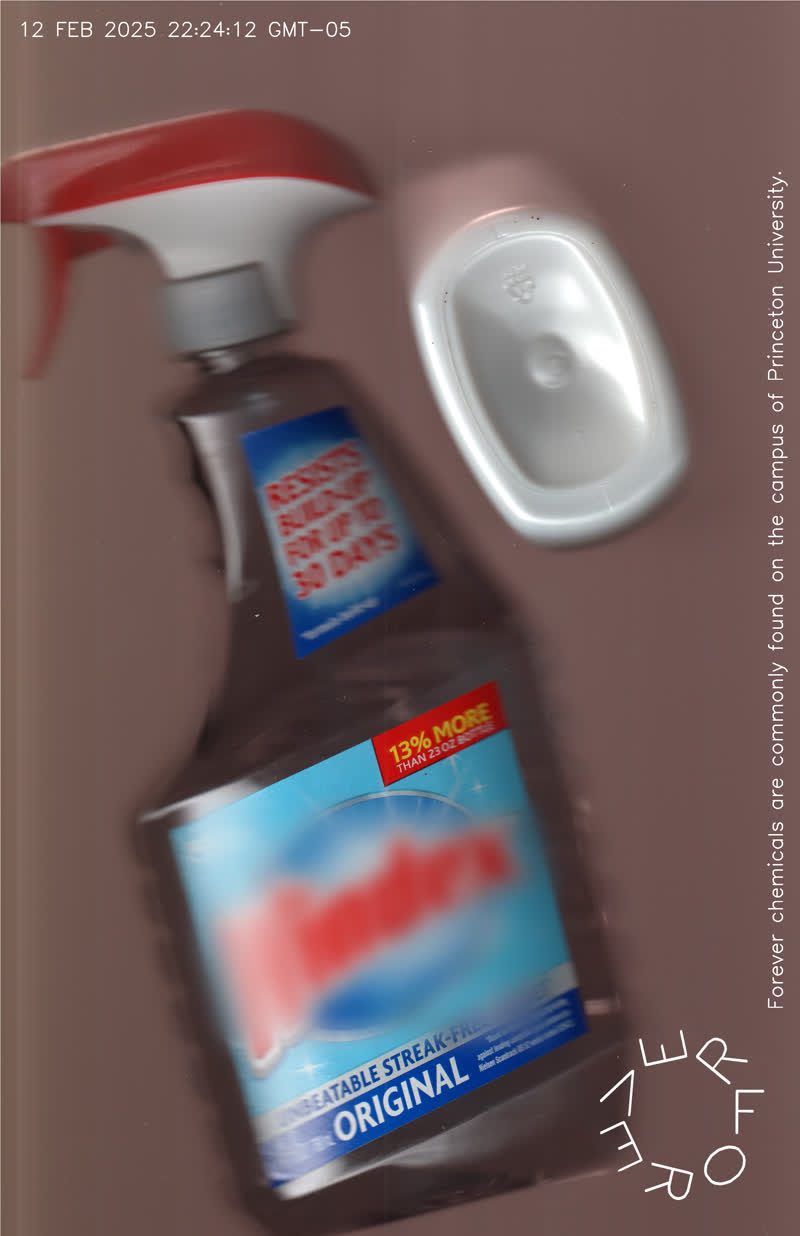
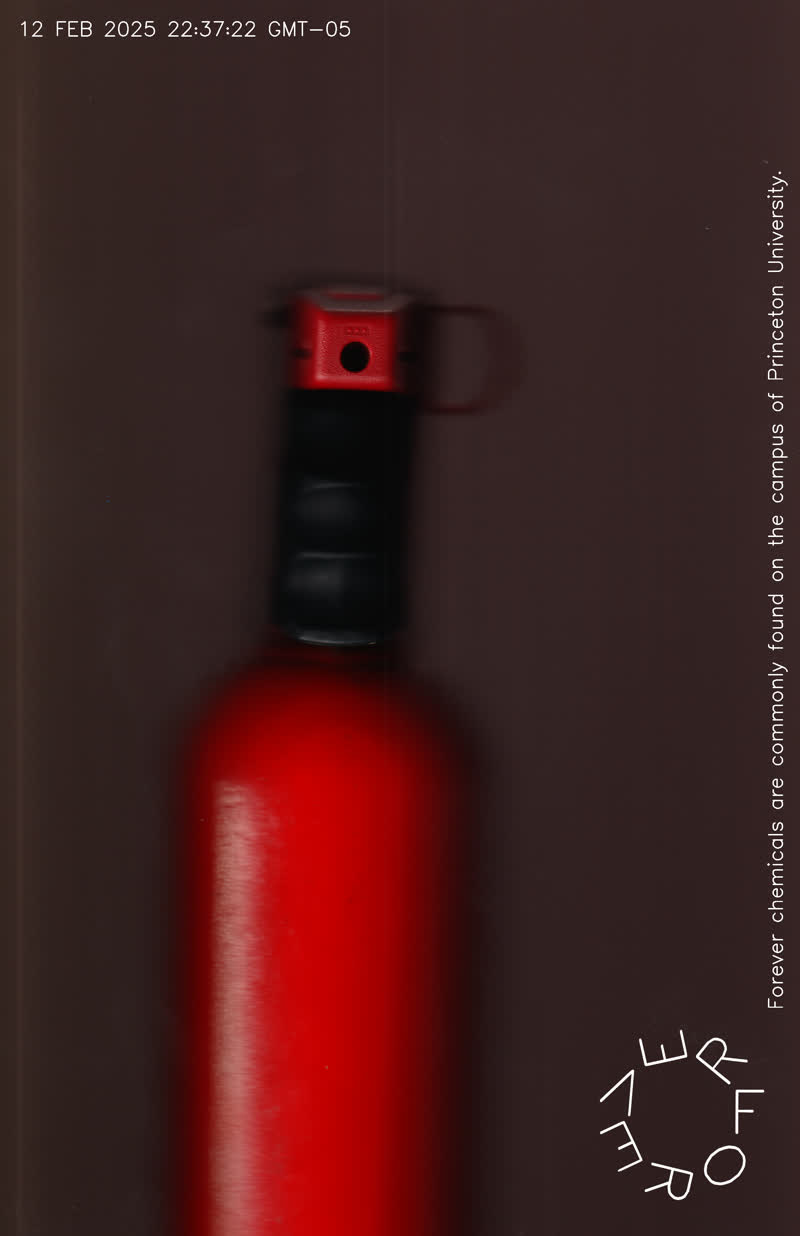
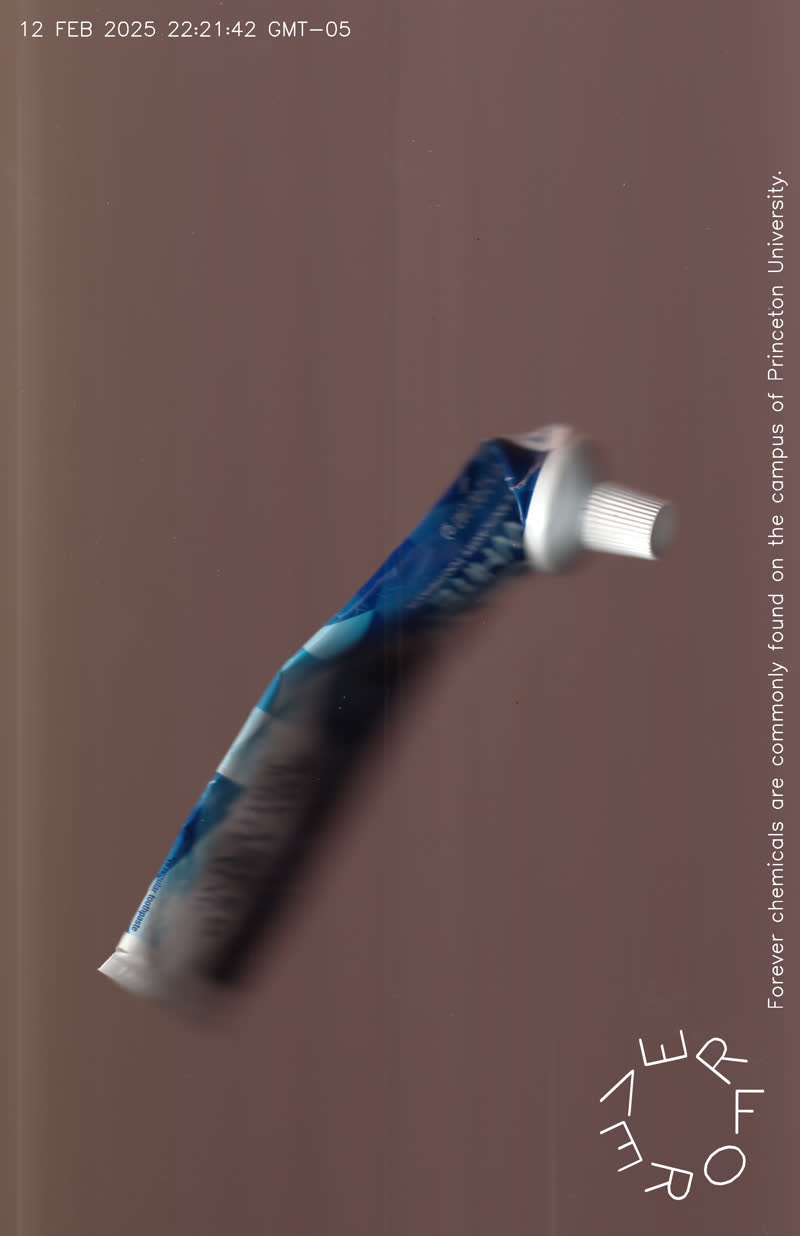
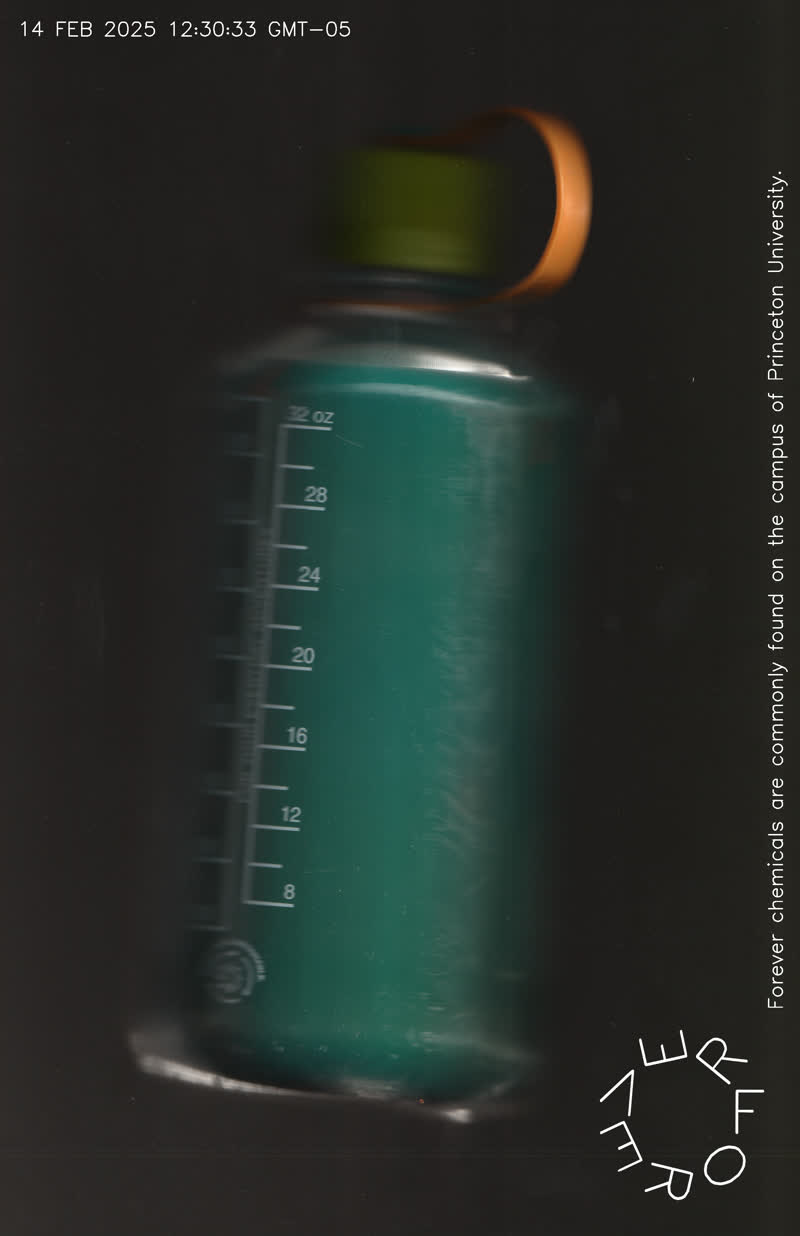
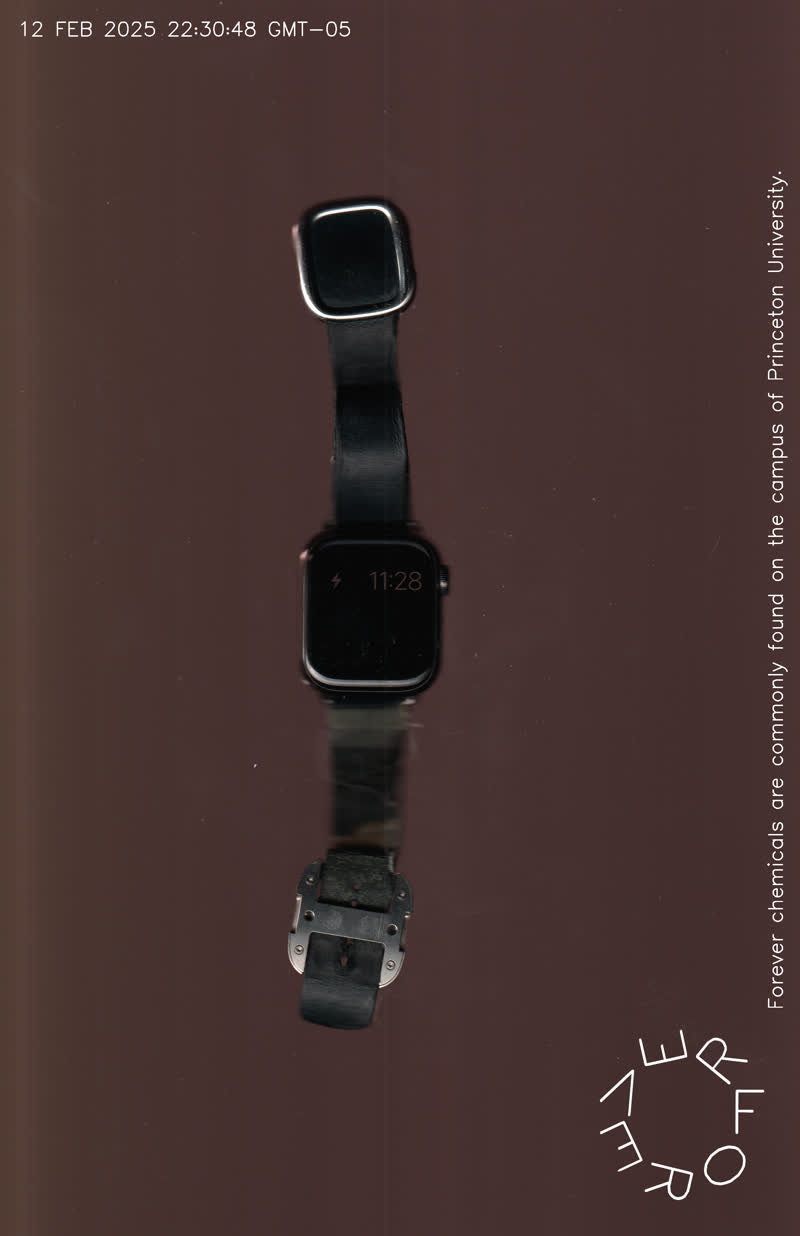
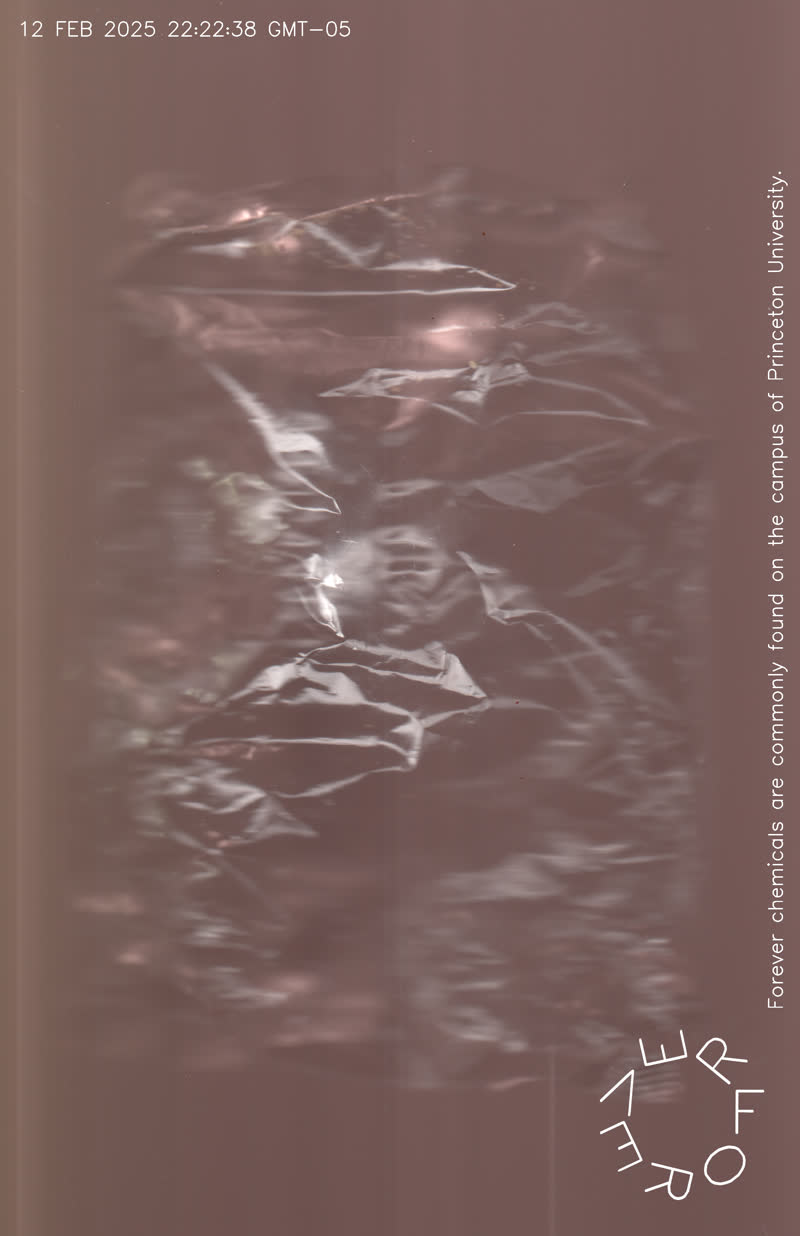
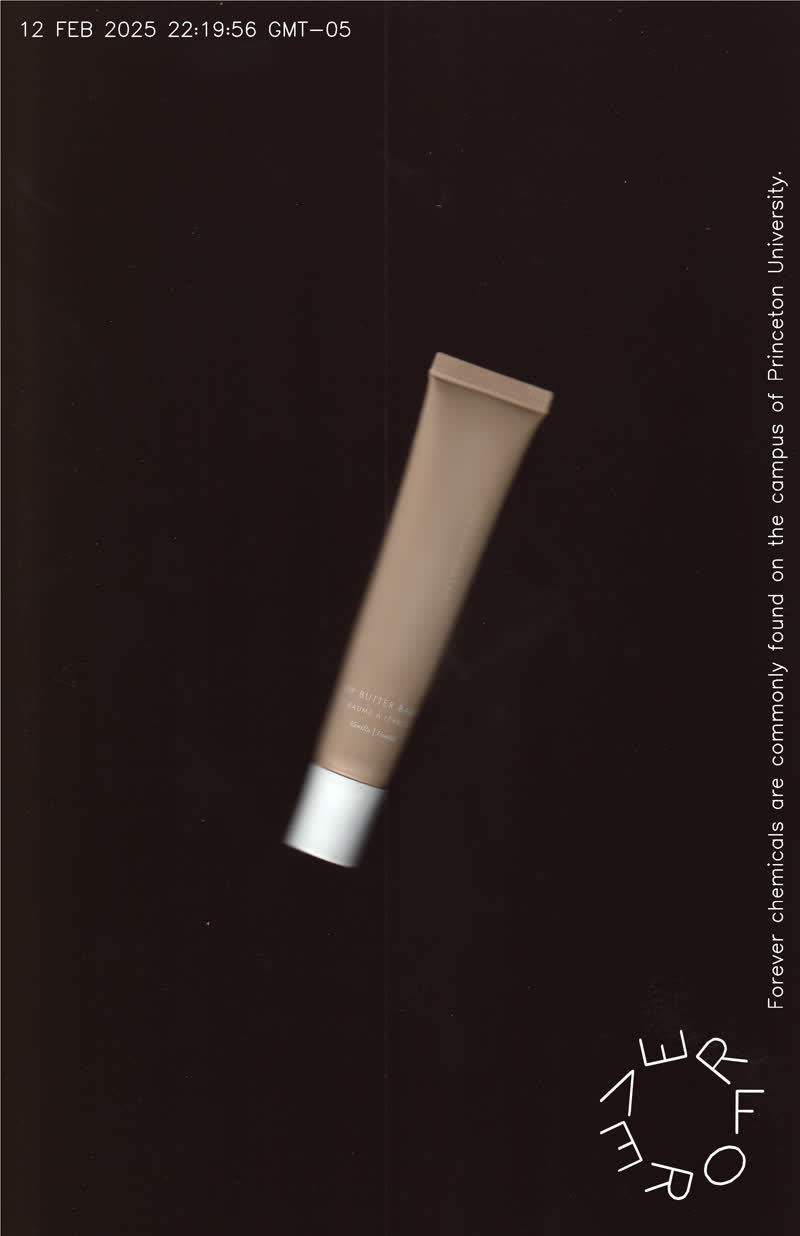
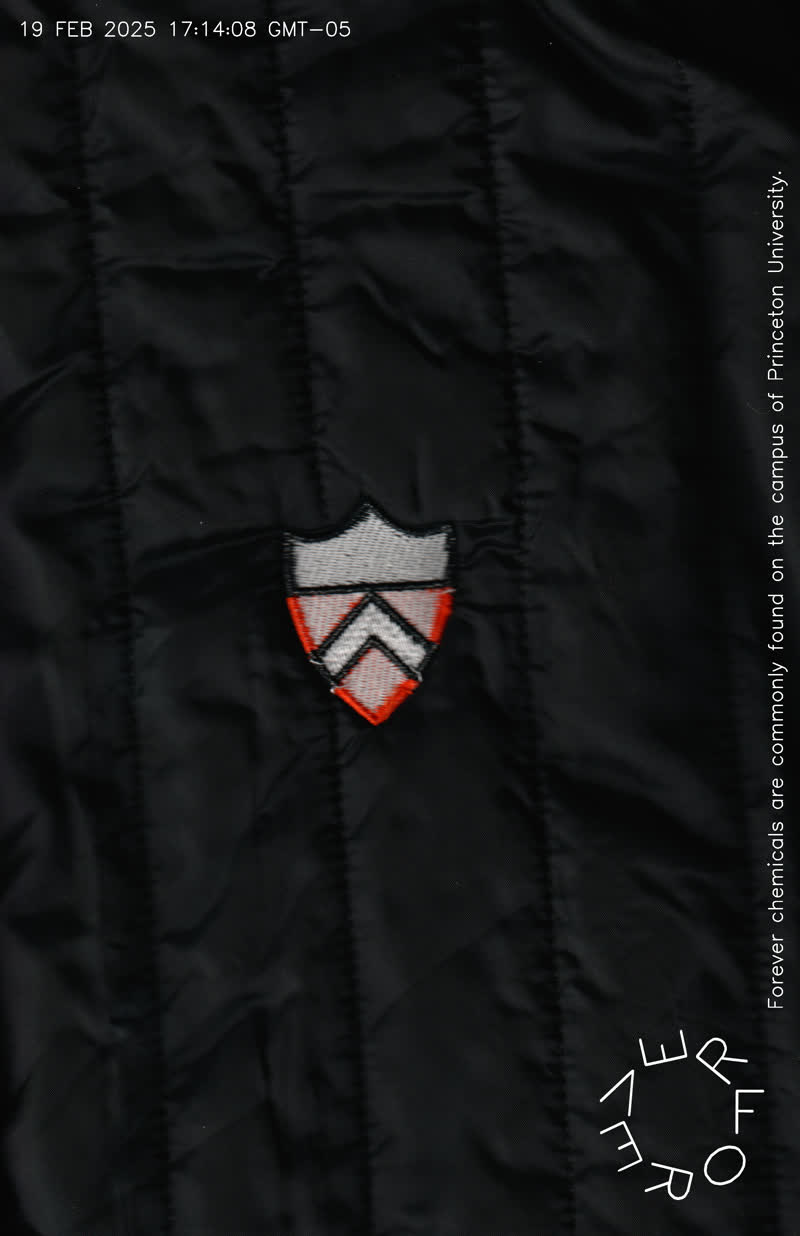
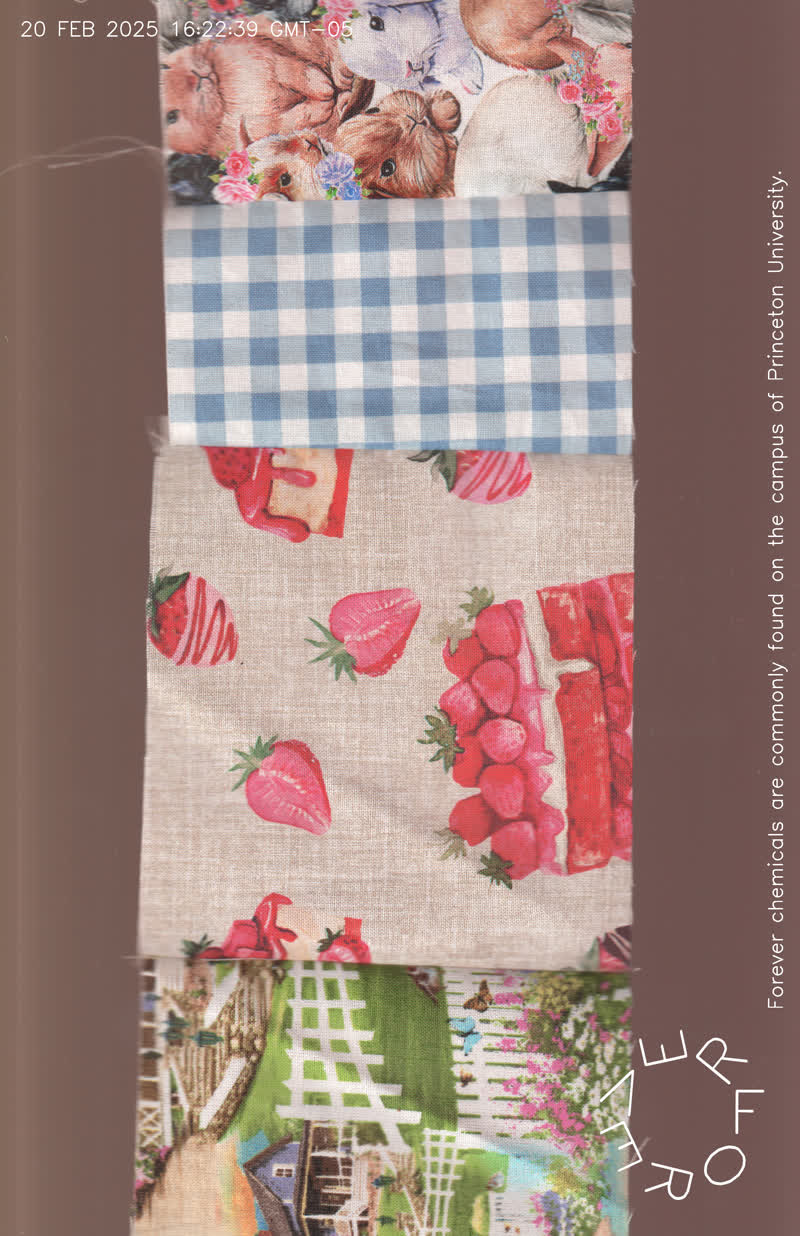
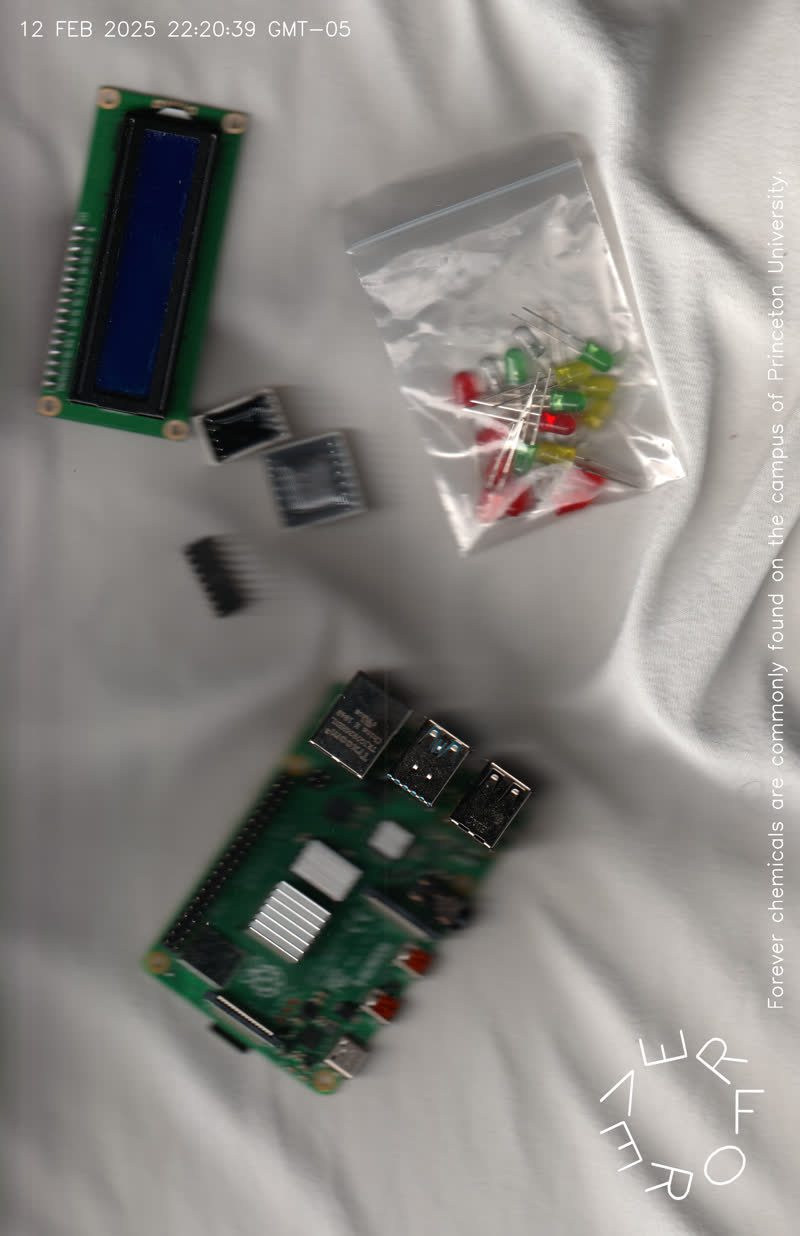
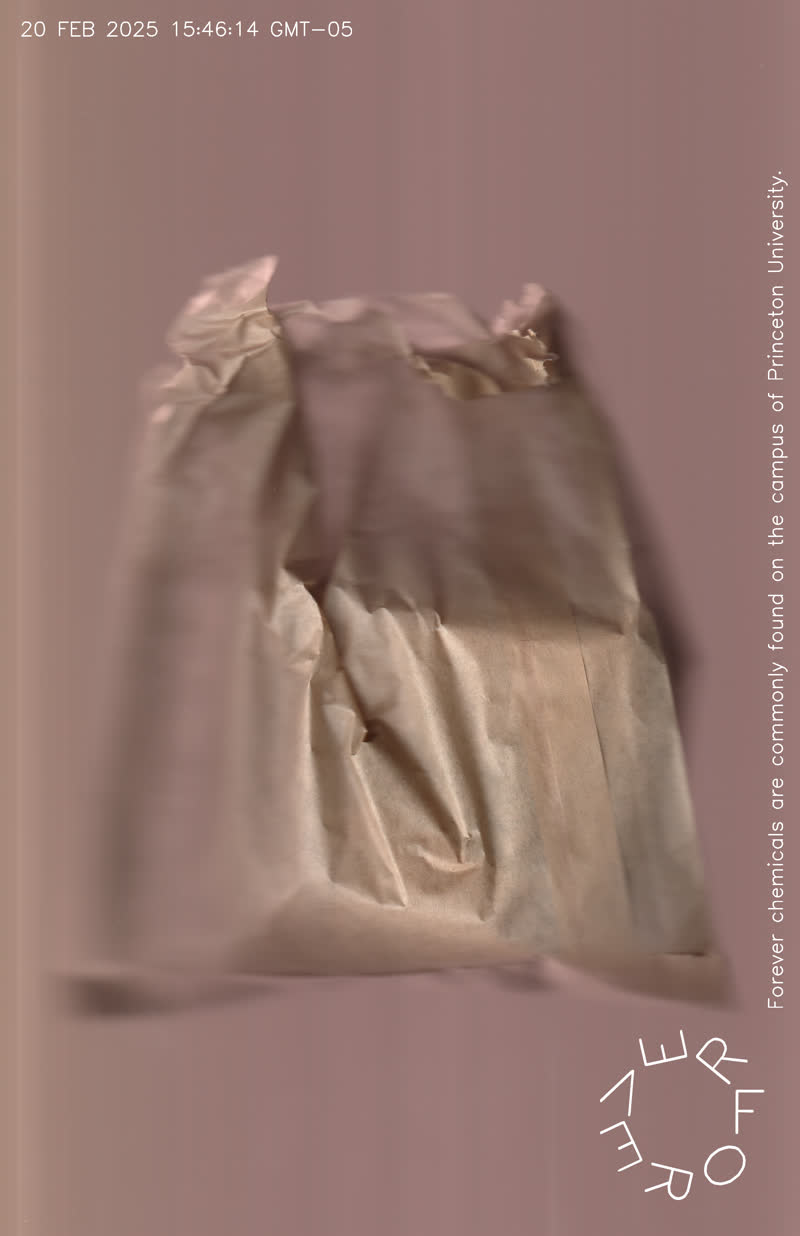
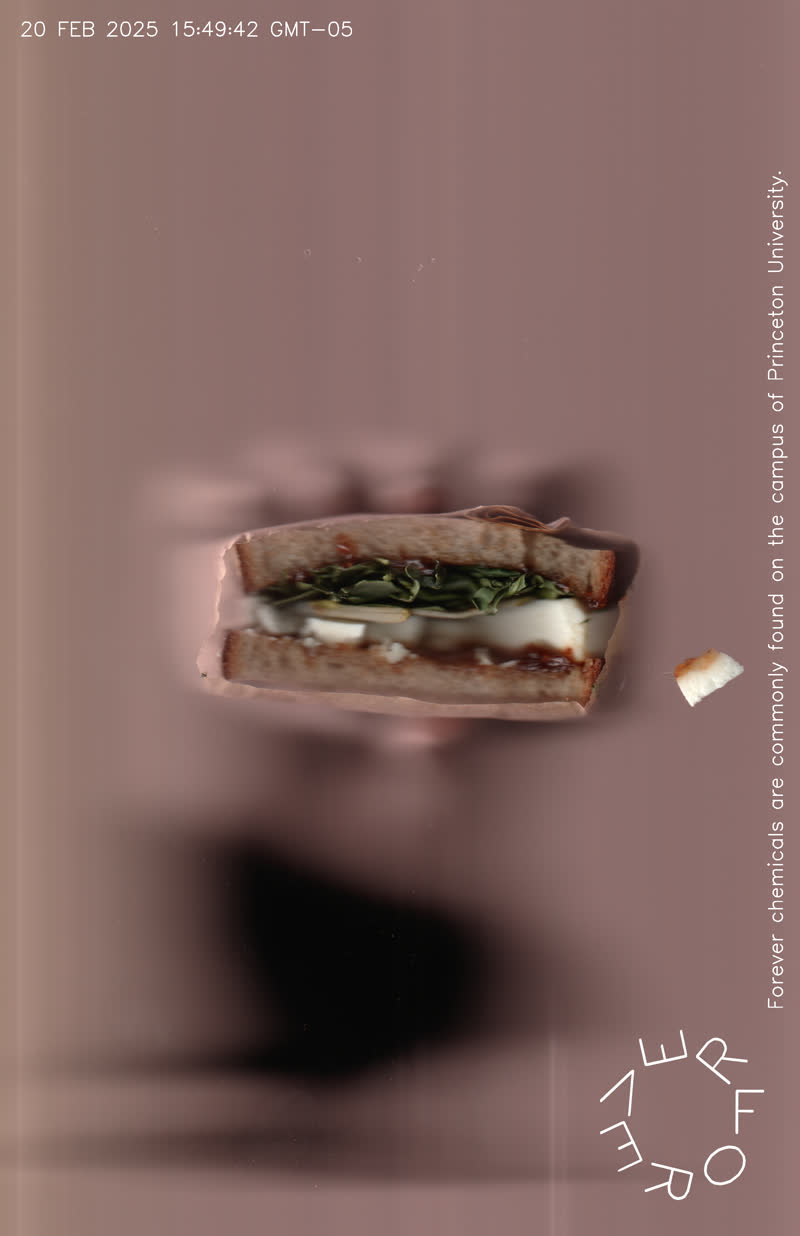
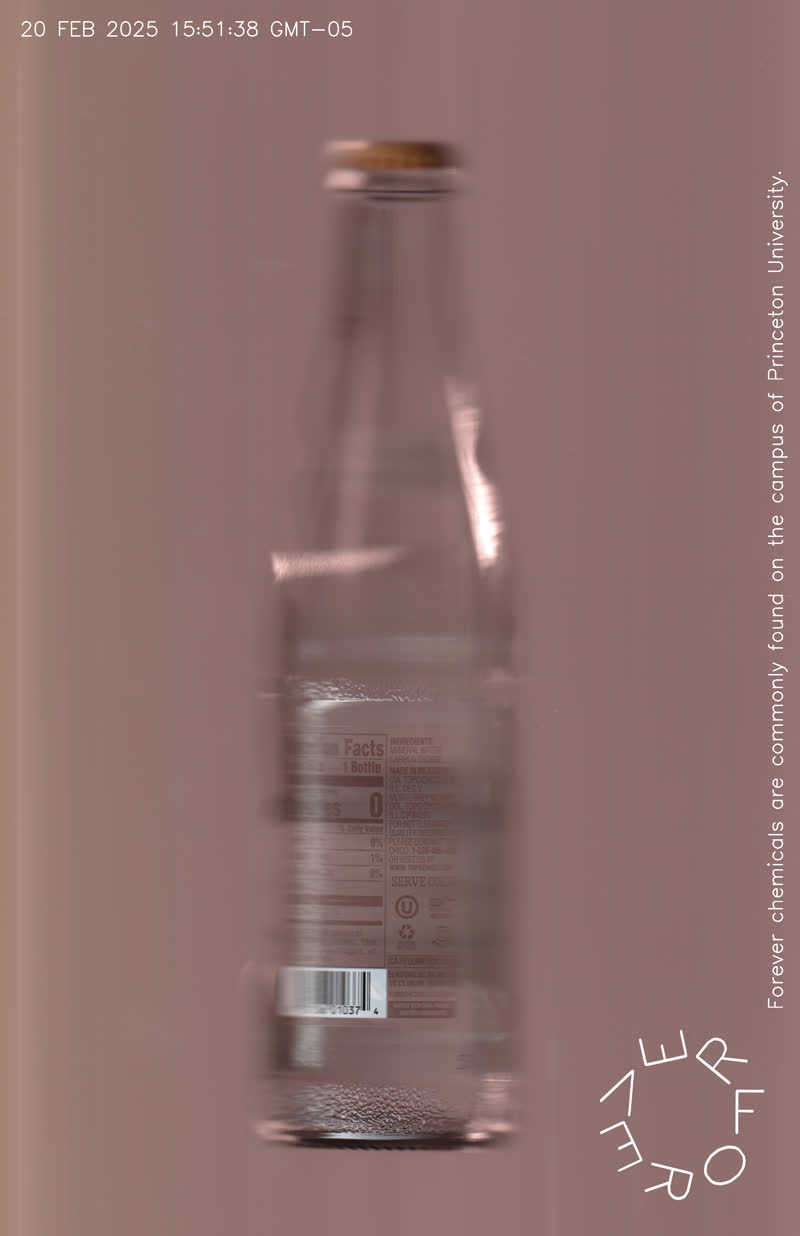
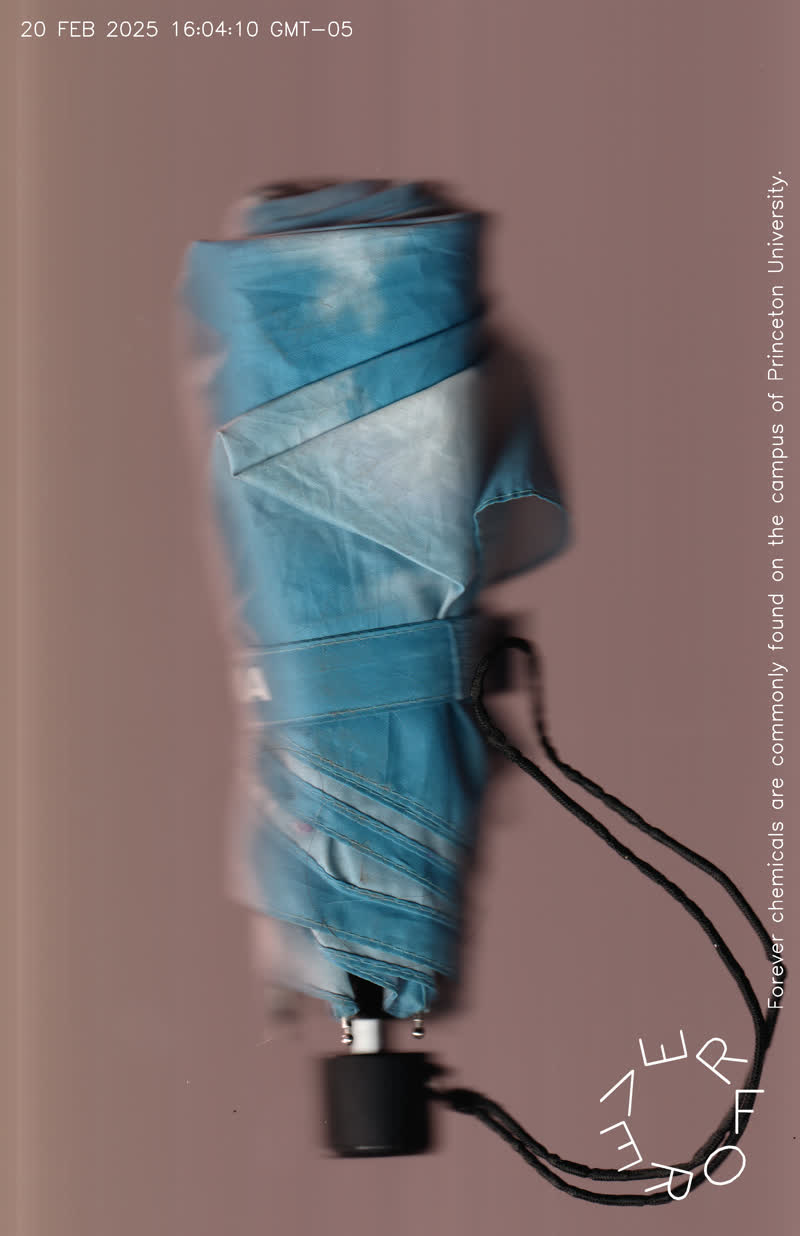
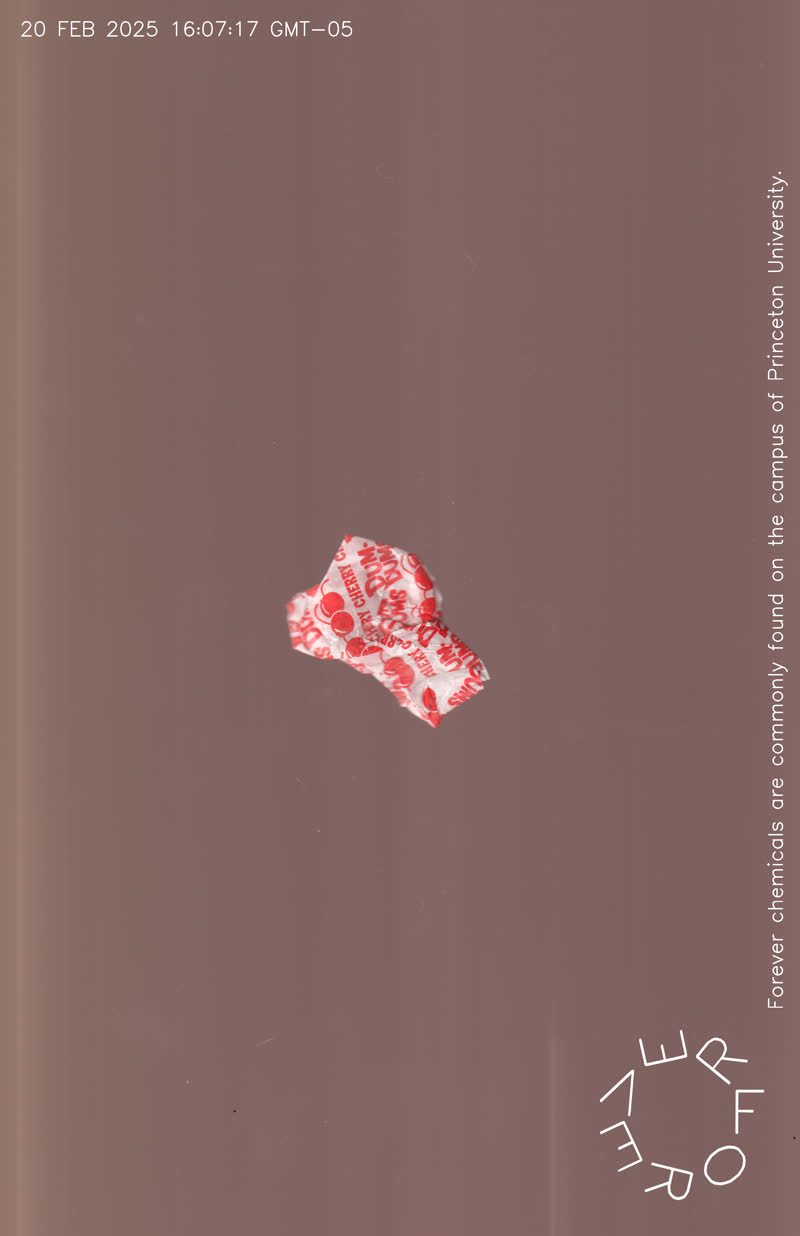
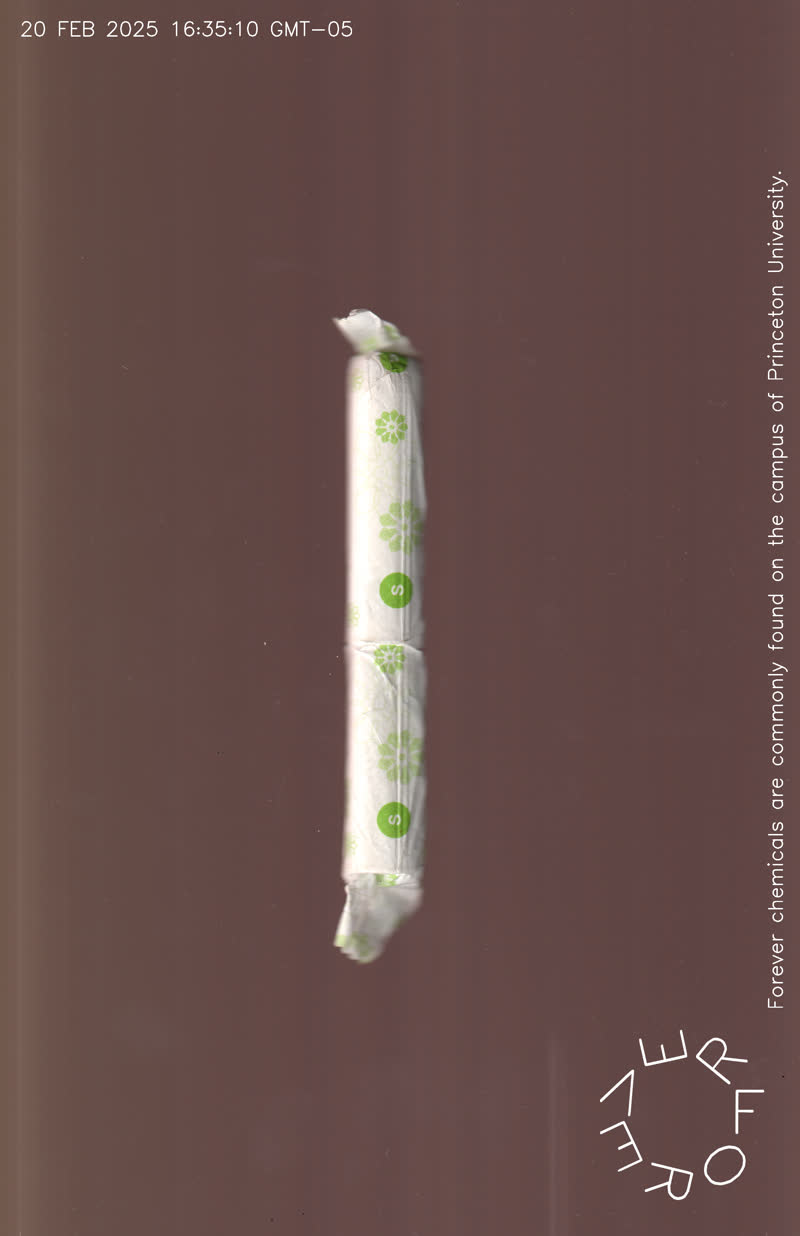
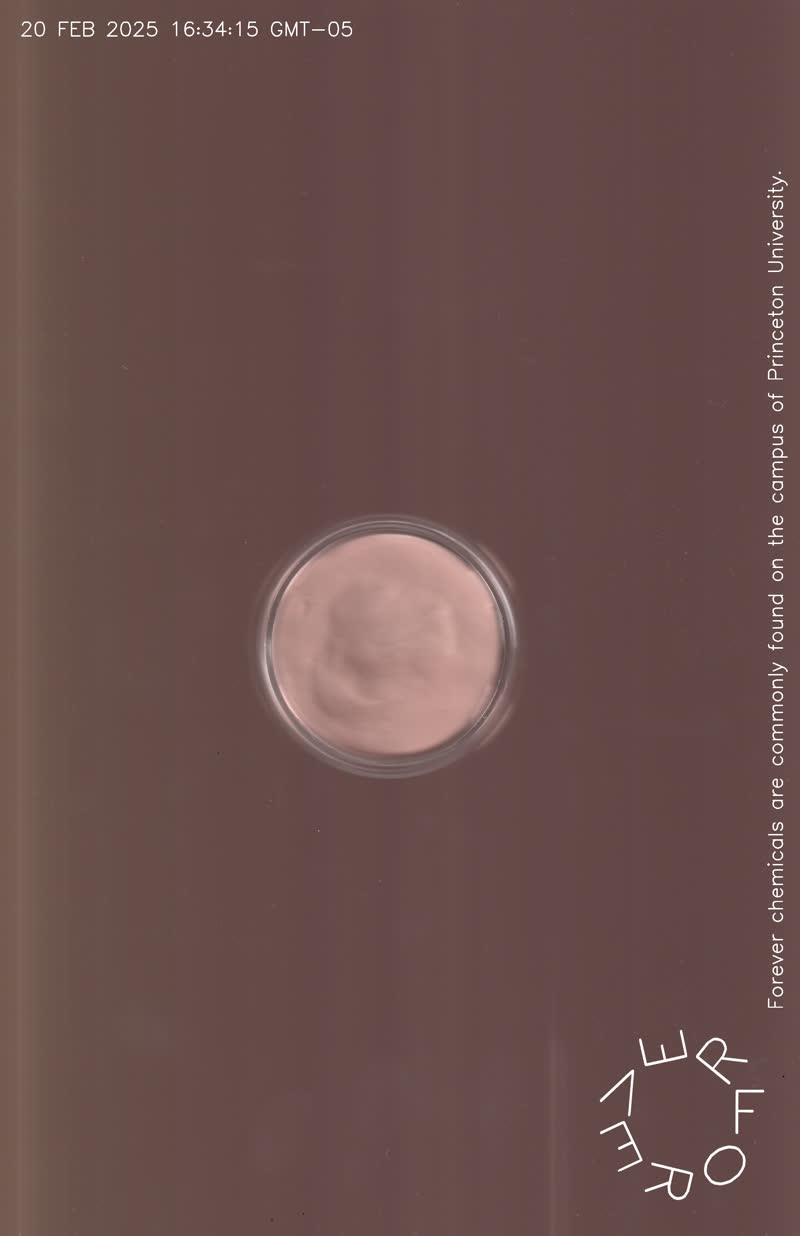

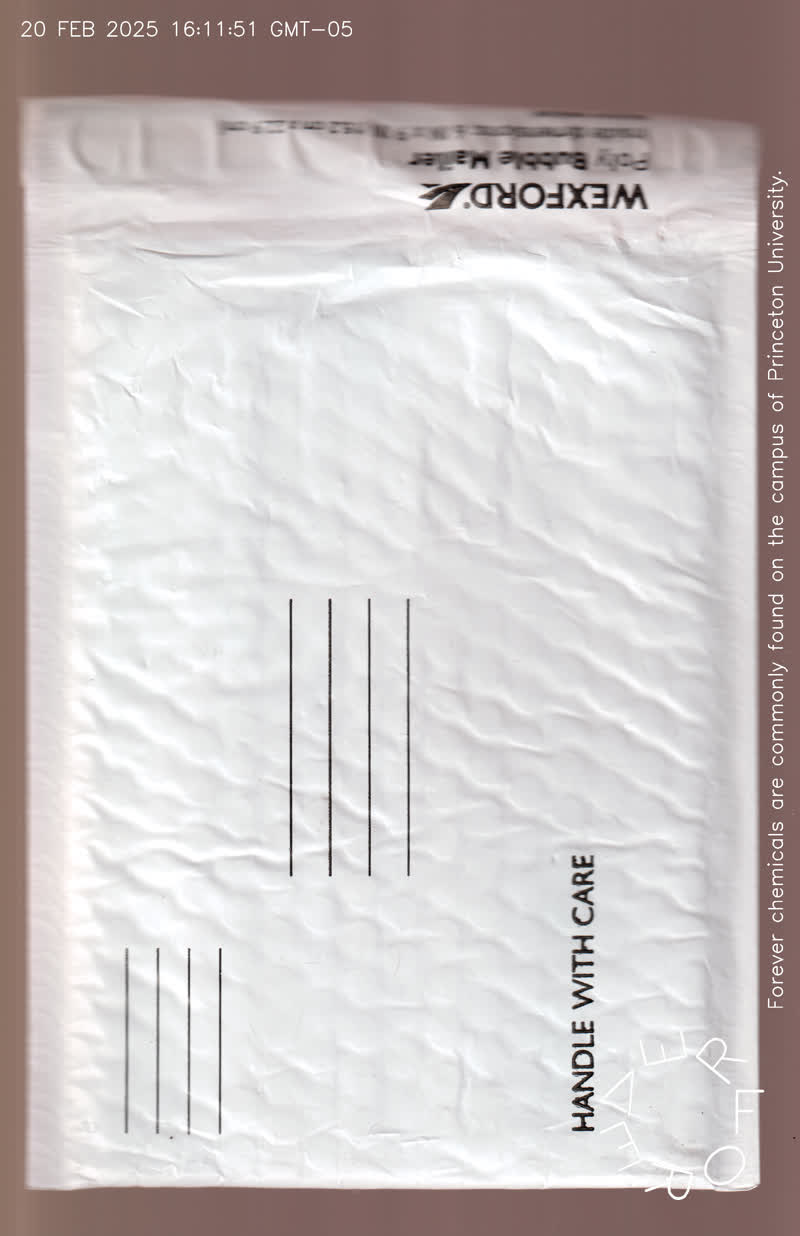
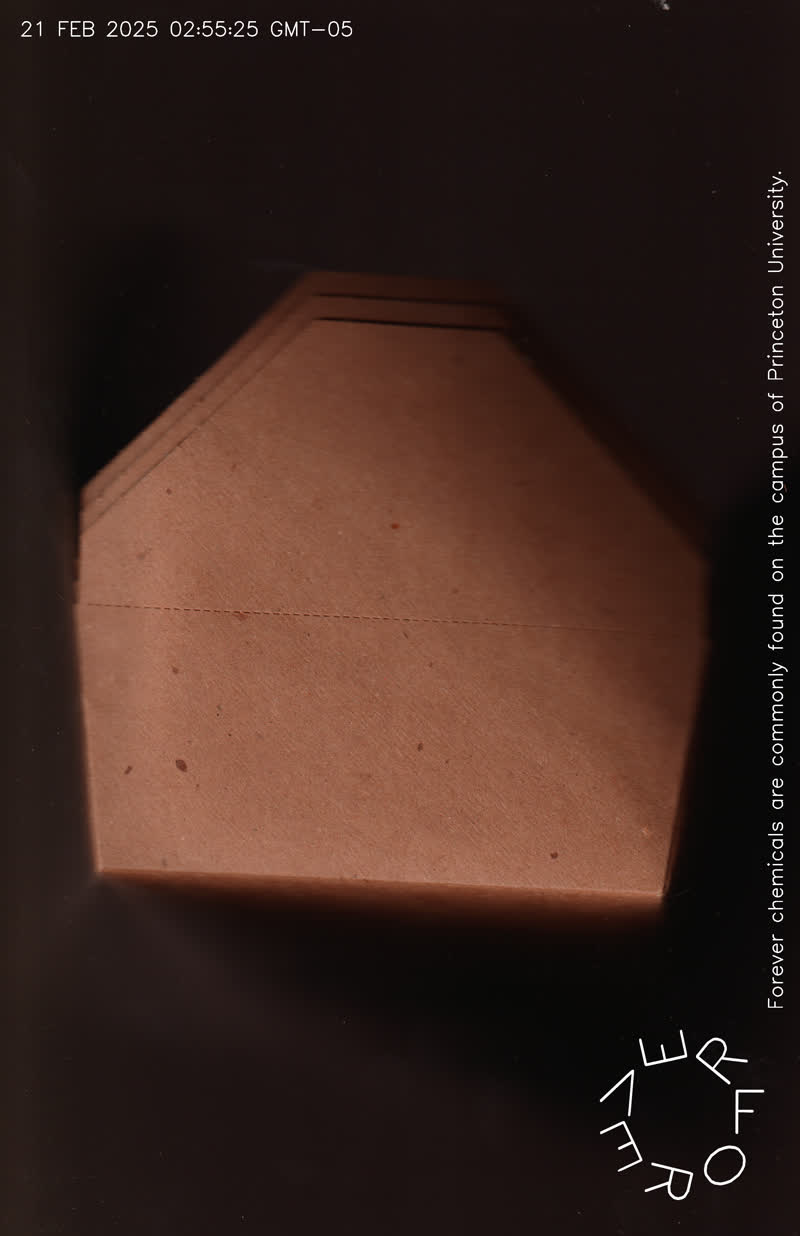
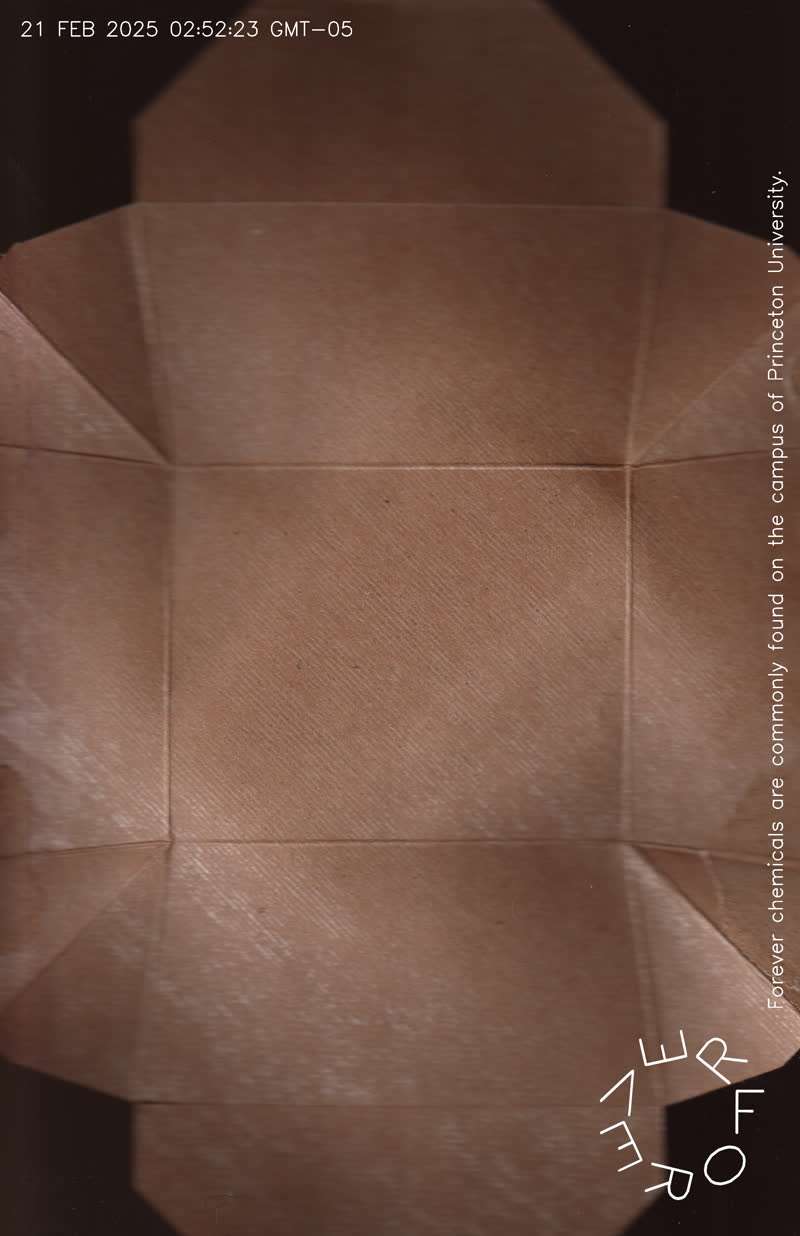
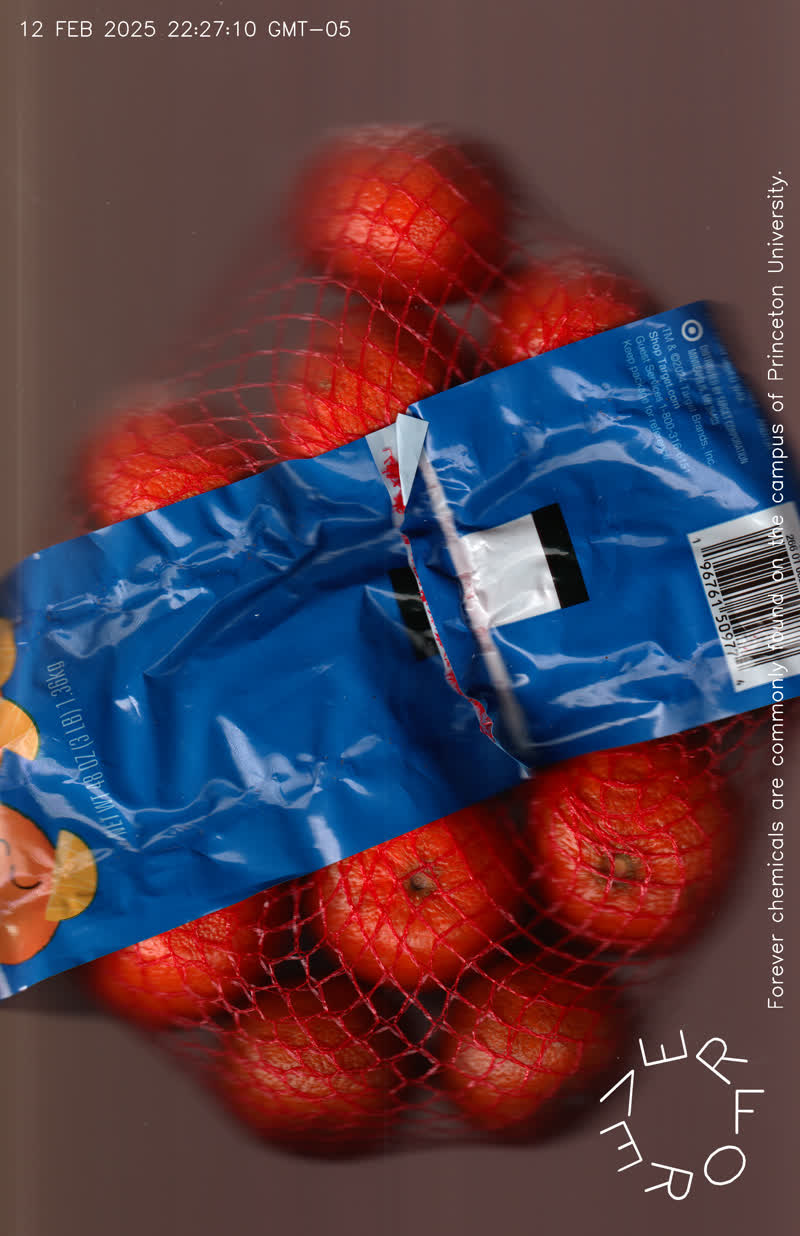
'FOREVER chemicals' are human-made substances that do not break down naturally. The chemicals, more precisely known as PFAS (Per- and PolyFluoroalkyl Substances), have been linked to cancers, immune system problems, high cholesterol, and reproductive issues, and accumulate in people, animals, and even drinking water. Forever chemicals are found in food packaging, puffer jackets, pizza boxes, toothpaste, cosmetics, shampoo, dental floss, microwave popcorn bags, non-stick cookware, electronics, paints, even carpets and furniture. But, they are also extraordinarily useful. PFAS are often used for their ability to repel water, or oil, and to produce non-stick surfaces. They are used in firefighting foams which save lives. They are used in manufacturing circuit boards and computer chips. Many of these items can be found on the campus of Princeton University.
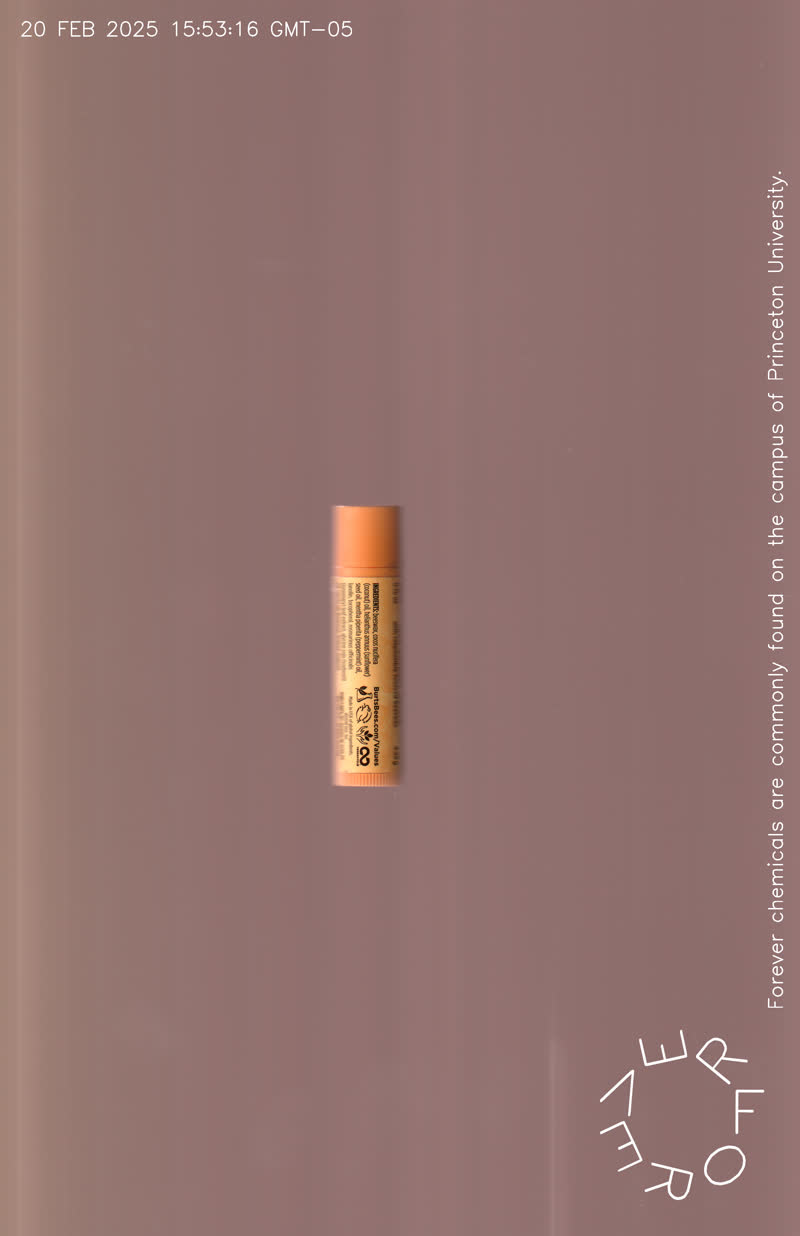
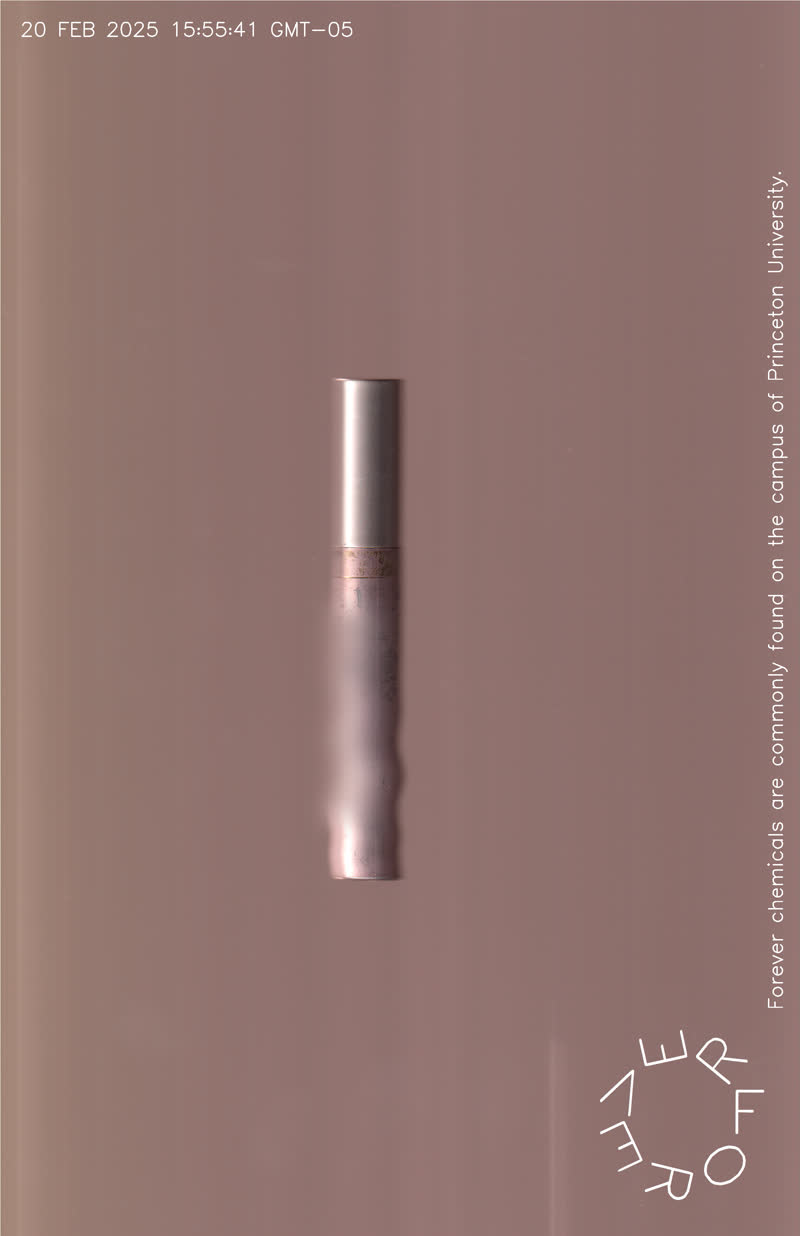
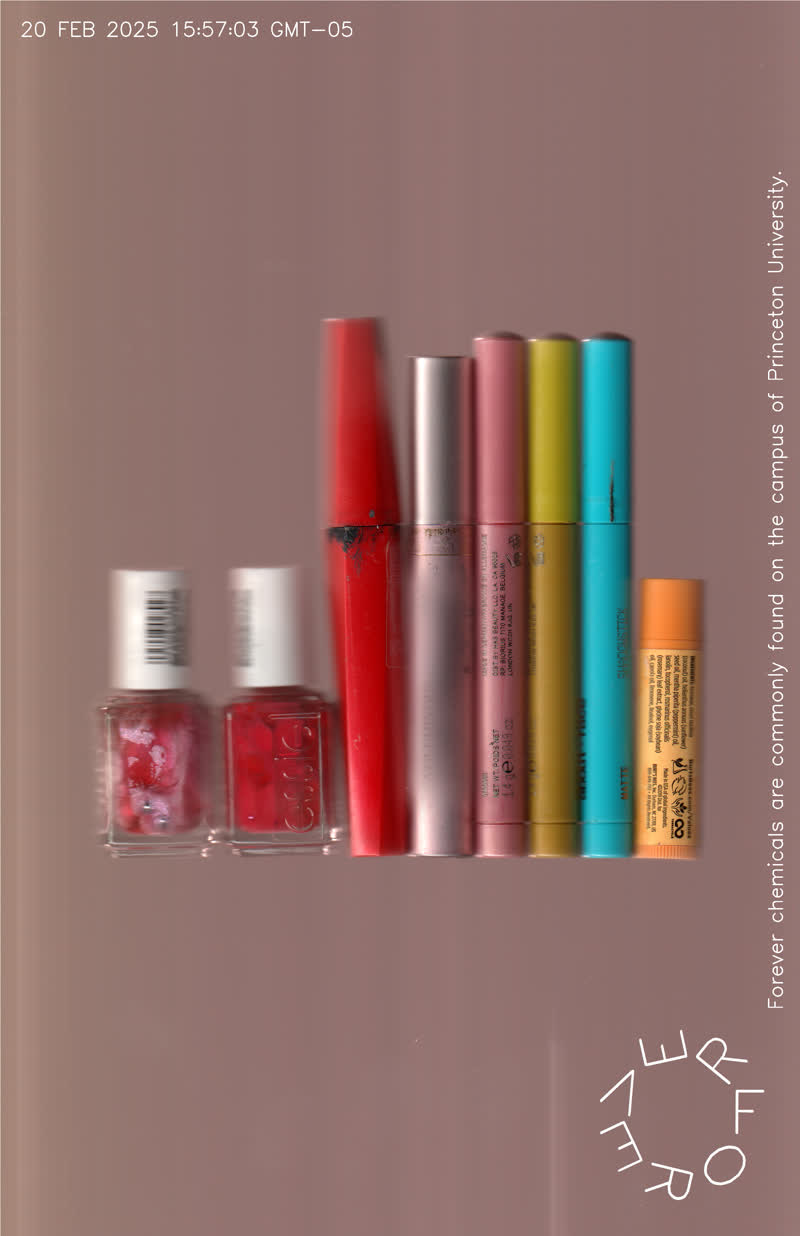
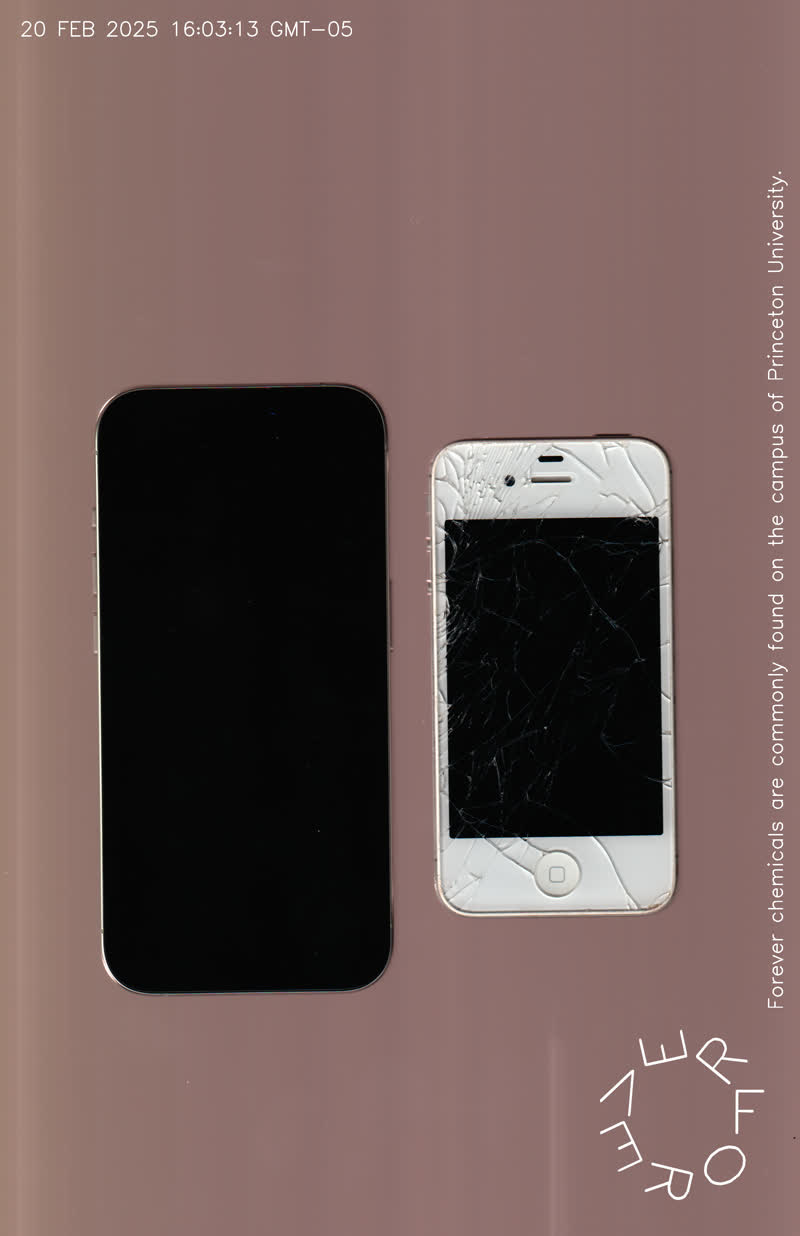
A set of posters collects concrete examples of objects found on campus which include forever chemicals. Produced in-situ with a custom portable object scanner, each poster registers when it was made with a time stamp. The first step in fixing a problem is recognizing the problem in our immediate vicinity.
A proposed certification mark identifies consumer products that are FOREVER FREE, meeting an accepted testing standard. This graphic logo currently appears on all related project materials.
The HALF-LIFE CLOCK is an installation on Princeton's campus which communicates the long and unintuitive timescale of forever chemicals.
This work was produced under a 2024 Office of the Dean for Research Innovation Fund for Collaborations between Artists and Scientists or Engineers grant, Forever chemicals, ecological futures: A collaboration of bioremediation science and multimedia storytelling.
www.f-o-r-e-v-e-r.org